Showing Posts From
Experiential events
- 09 Mar, 2026
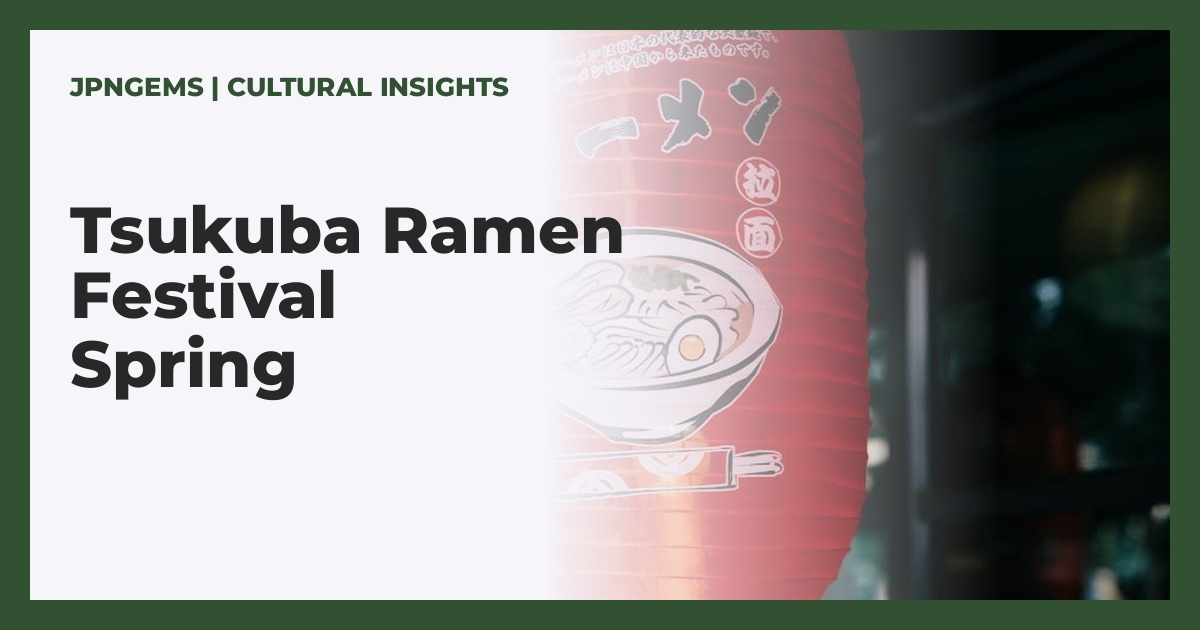
Tsukuba Ramen Festival Announces Spring Event Lineup
Curator's Note: One of Japan's larger ramen events is slated for Tsukuba. Ramen holds a distinct place within Japanese culinary traditions, and for those with an appreciation for it, the opportunity to experience renowned establishments and exclusive collaborations, all within reach of Tokyo, could be quite compelling.The upcoming "Dai Tsukemen Haku Presents Tsukuba Ramen Festival" is expected to bring a focused culinary experience to Kenkyu Gakuen Ekimae Koen in Tsukuba City, Ibaraki Prefecture. Produced by Dai Tsukemen Haku, an organization that has notably drawn over three million visitors to its various ramen-focused endeavors, this event suggests a certain level of expertise in curating such gatherings. Its location in Tsukuba, while not central Tokyo, offers an accessible destination for those seeking a dedicated exploration of regional ramen styles. Scheduled across two distinct waves in March 2026, the festival is said to feature around 20 booths, including several unique collaboration shops. This two-part structure, with the first wave running from March 13th to 15th and the second from March 19th to 22nd, could allow for a broader representation of culinary perspectives. The concept of collaboration shops, where renowned establishments merge their culinary approaches, often yields dishes that are not available elsewhere, presenting a specific draw for enthusiasts. The initial wave of participating ramen shops reportedly includes a diverse selection. One might anticipate a range from 衝青天's Hiroshima oyster salt ramen, which suggests a delicate brininess, to 味噌麺処 花道庵's Michelin Bib Gourmand miso ramen, indicating a certain standard of quality in a more robust flavor profile. Other notable mentions include つけ麺和 with its Nodoguro dashi tsukemen, focusing on a rich broth from blackthroat seaperch, and inEZO's Sapporo miso, which is said to incorporate potato, offering a textural and regional twist. This selection hints at a thoughtful curation, aiming to showcase the breadth of regional Japanese ramen. The second wave continues this exploration with shops like らあめん元, known for Matsusaka beef and niboshi salt ramen, suggesting a blend of luxurious ingredient and traditional dashi. 仙臺くろく is expected to offer a shellfish dashi with thinly sliced beef tongue, a combination that could provide a distinct umami experience. Furthermore, the inclusion of ど・みそ, which specializes in a rich miso ramen featuring five blended misos, underlines the festival's commitment to presenting varied and deeply flavored interpretations of the dish. Beyond ramen, the festival is also set to include booths featuring popular gyoza varieties from across Japan, such as those from 一品香 小山餃子 and 元祖ぎょうざ苑. This addition suggests a broader culinary appeal, offering a complementary experience to the main ramen focus. A special stage with performances by comedians and idols like AMEMIYA and 電撃ネットワーク is also planned. While not the primary draw for a culinary event, such elements can contribute to a lively atmosphere, potentially enhancing the overall experience for attendees.**Event Information:** - **Event Name:** 大つけ麺博Presentsつくばラーメン祭 (Dai Tsukemen Haku Presents Tsukuba Ramen Festival) - **Producer:** 大つけ麺博 (Dai Tsukemen Haku) - **Location:** 研究学園駅前公園 (Kenkyu Gakuen Ekimae Koen), Tsukuba City, Ibaraki Prefecture - **Dates:** - First Wave: March 13 (Fri) - March 15 (Sun), 2026 - Second Wave: March 19 (Thu) - March 22 (Sun), 2026 - **Operating Hours:** 11:00-20:00 (March 13 & 19: 17:00-20:00) - **Features:** Approximately 20 booths, including unique collaboration ramen shops, popular gyoza selections from across Japan, and special stage performances.References & Where to Buy
- 02 Mar, 2026
Yokohama Bread Festival 2026 Preview: Savory Sandwich Offerings
Curator's Note: The upcoming Yokohama bread festival is set to feature notable sandwich purveyors. In Japan, while classic croissants and baguettes are appreciated, "souzai-pan" – bread topped or filled with savory ingredients – holds a significant place. This event appears to be a good opportunity for those interested in exploring unique Japanese bread offerings.The Yokohama Red Brick Warehouse, a site that often hosts cultural events, is once again preparing for the "Pan no Fes 2026," billed as Japan's largest bread event. Scheduled for early March, this gathering is expected to showcase a range of bakeries, but my attention is drawn to two particular exhibitors known for their distinctive approach to sandwiches: "Sandwiches Merci" and "Hitokami," a specialist in low-temperature cooked pork cutlet sandwiches. "Sandwiches Merci," with its main store in Kichijoji, has cultivated a reputation for crafting sandwiches that balance visual appeal with a satisfying experience upon consumption. For the festival, they are said to be reintroducing their "Revived Phantom Croque Madame Sandwich," a creation that features a rich white sauce and cheese. The meticulous preparation of a classic like the Croque Madame, often reinterpreted with local sensibilities, resonates with the Japanese appreciation for refined comfort food. It suggests a careful consideration of texture and flavor, aiming for a harmonious bite. Alongside Merci, "Hitokami" will be presenting its unique take on the katsu sando, utilizing a proprietary low-temperature cooking method to preserve the umami in their pork cutlets. Their "Wayo no Ran" (Japanese/Western Battle) two-type comparison set is particularly intriguing. This set is expected to include a pork cutlet sandwich with a distinct "special rich black sauce," hinting at a savory, perhaps umami-driven Japanese influence, alongside an "omu-hirekatsu" version, where the pork cutlet is enveloped in an omelet. This blend of traditional Japanese flavors with Western culinary elements, such as the omelet, exemplifies a common thread in Japanese food culture: the thoughtful adaptation and fusion of diverse influences into something uniquely local. Both brands, I note, are also contenders for the "Pan no Fes Award 2025," suggesting a level of recognition within the industry. This festival, by highlighting offerings like these savory sandwiches, provides a window into a particular facet of Japanese bread culture. Beyond the artisanal loaves or sweet pastries, "souzai-pan" – bread integrated with savory fillings or toppings – is a prevalent part of daily life. The selections from Merci and Hitokami seem to embody this tradition, offering carefully constructed items that are both familiar and subtly inventive. The opportunity to sample these items, particularly the "Wayo no Ran" set with its contrasting profiles, presents a compelling reason to visit.**Event Information:** - **Event Name:** Pan no Fes 2026 in Yokohama Red Brick Warehouse - **Dates:** March 6 – March 8, 2026 - **Location:** Yokohama Red Brick Warehouse Event Plaza, Yokohama, Kanagawa Prefecture - **Entry Fee:** Free (Some paid areas: ¥1,000 cash / ¥900 cashless) - **Featured Items (Expected):** - Sandwiches Merci: "Revived Phantom Croque Madame Sandwich" (¥650税込) - Hitokami: "Wayo no Ran" (Japanese/Western Battle) 2-type comparison set (¥850税込) - **Pan no Fes Award 2025 Voting:** - Web Voting: January 13 – March 5, 2026 (until 18:00 JST) - Venue Voting: March 6 – March 8, 2026 (until 14:00 JST)References & Where to Buy

- 01 Mar, 2026
Kuragari Village: A Hillside Retreat Near Osaka and Nara
Curator's Note: It is rare to find an outdoor experience so close to a major metropolis like Osaka, complete with a cafe dedicated to exceptional eggs. The opportunity to enjoy Japan's renowned eggs while engaging in outdoor activities near a bustling city feels like a genuine luxury.Nestled on the historic Kuragari Pass, a route straddling the prefectural border between Osaka and Nara, a new facility named KURAGARI VILLAGE is expected to open its doors on March 1, 2026. This location, known for its steep inclines and narrow paths – with access from the Nara (Ikoma) side being the recommended approach – offers expansive views of Mt. Ikoma and a quiet retreat from urban life. The concept behind Kuragari Village appears to be an integrated experience of nature, culinary focus, and gentle activity. Central to the village is the "egg cafe," which, according to the release, will operate from 10:30 to 15:00, closing on Wednesdays. Here, the emphasis is on locally sourced ingredients, specifically eggs laid by chickens raised on-site by the staff. The menu is said to feature a premium omurice set, which includes the omelet alongside chicken nanban served with house-made tartar sauce, all utilizing these freshly collected eggs. For those seeking a more direct experience of the egg's quality, a special tamago kake gohan (TKG) is listed, prepared with rare Araucana eggs, which are reportedly collected only once every three days. A rich, egg-based pudding is also anticipated to be on offer, providing a thoughtful conclusion to a meal centered on this fundamental ingredient. Payment options for the cafe are noted to be flexible, accommodating credit cards, e-money, cash, and PayPay. Adjacent to the cafe, the "Asa Tore Tamago BASE" campsite is designed to extend this connection to nature and fresh produce. Campers are expected to receive freshly laid eggs for their morning meal, an element that subtly ties the culinary and outdoor experiences together. A small stream runs alongside the camping area, offering opportunities for engaging with seasonal natural elements. The campsite welcomes overnight guests with check-in from 13:00 to 16:00 and check-out by 11:00 the following day. Day-use options for the campsite are slated to begin mid-March 2026, providing further flexibility for visitors. Unlike the cafe, the campsite is expected to operate daily, though payments are limited to cash. Beyond the dining and camping, the village aims to provide a broader interaction with its natural setting. Various animals, including goats, miniature horses, chickens, and ducks, are said to reside within the facility, contributing to a pastoral atmosphere. For recreation, areas are being prepared with features such as giant tree athletics, swings, slides, and trampolines, alongside opportunities for play in the aforementioned stream. The facility is designed to accommodate both day visitors and those seeking an overnight stay, with a parking capacity for 45 vehicles, addressing a practical concern for a location accessible primarily by car.**Facility Details:** - **Name:** クラガリビレッジ (KURAGARI VILLAGE) - **Opening Date:** March 1, 2026Reference

- 28 Feb, 2026
Jikko Hamono Unveils Kyoto Arashiyama Store: A Blade Craft Exhibition
Curator's Note: Japanese knives hold a global reputation for their precision. A new Jikko Hamono store, set to open in Kyoto's scenic Arashiyama, is expected to offer a glimpse into the knife-making process. It could be a worthwhile stop for those exploring Kyoto.The landscape of Kyoto's Arashiyama, often associated with its bamboo groves and serene temples, is soon to welcome a different kind of cultural landmark. Jikko Hamono, a blade manufacturer with roots tracing back to Meiji 33 (1900), is preparing to open a new store that is said to offer more than just retail. Positioned as a "museum showcasing the knife manufacturing process," this establishment aims to blend the practical selection of culinary tools with an appreciation for their intricate creation. On the first floor, visitors will find a considered display of 28 distinct types of knives, organized by their intended use. This includes specialist blades like sashimi knives, alongside versatile options such as santoku and gyuto. The intention is for customers to handle these tools directly, evaluating their weight and balance firsthand. This tactile experience is, in my view, quite valuable; the ergonomics of a knife are as crucial as its sharpness, and personal feel often dictates a truly good fit. Staff members are expected to be on hand, offering guidance to help patrons select the optimal blade based on their specific cooking habits and culinary needs. Beyond the functional display, various Jikko Hamono brands—including Flare, Ginza, and Loco & Boko—will also be showcased, allowing for a broader understanding of their design philosophies. Ascending to the second floor, the space transitions into what is described as a museum, dedicated to illustrating the stages of knife production. Here, the processes of forging, sharpening, and finishing are to be laid bare, providing insight into the meticulous craft involved. Tools utilized in these traditional methods will also be on display, alongside an introduction to what Jikko Hamono considers its five core strengths. This educational component is particularly noteworthy; understanding the journey of a blade, from raw material to a finely honed instrument, can deepen one's appreciation for both the object itself and the skilled hands behind it. It offers a grounded look into a craft that is central to Japanese culinary tradition, making it an experiential spot for those interested in the nation's rich blade culture. The store's location is also quite accessible, being a mere two-minute walk from Randen Arashiyama Station, and within a ten to eleven-minute stroll from JR Saga-Arashiyama Station and Hankyu Arashiyama Station respectively. It is expected to operate daily from 9:30 AM to 5:30 PM, making it a convenient stop for those exploring the wider Arashiyama area.**Shop Details:** - **Name:** 實光刃物 京都嵐山店『包丁の製造工程を見せる美術館』 - **Price:** Not specified - **Open:** January 31, 2026

- 27 Feb, 2026
Nagoya Exhibitions Explore Everyday Thrills and Social Connection
Curator's Note: A pair of intriguing, limited-time events are set to open in Japan. Focused on everyday thrills and the concept of 'komyusho' (social awkwardness), these exhibitions feel distinctly Japanese in their approach, yet many might find common ground in their themes.Nagoya's Hisaya-odori Gardens Flairie is expected to host two concurrent experiential exhibitions next spring, offering a subtle exploration of human response and self-perception. Running from March 21 to April 5, 2026, these events, titled "A Little Thrill Exhibition" and "What's Wrong with Being Komyusho? Exhibition," are designed to encourage visitors to encounter "themselves" by observing their own reactions. The "Little Thrill Exhibition" is presented as a kind of emotional laboratory, where participants are invited to experience moments when the brain perceives danger in an otherwise safe environment. This concept, produced by Eita Suzuki of Toki-Tech, is said to feature over ten distinct types of experiences, ranging from visual and auditory stimuli to challenges involving choice, prediction, and imagination. It's an interesting premise, moving beyond overt fear to a more nuanced understanding of our instinctive responses. The involvement of Nagoya Designer Academy students in the logo and venue design suggests a thoughtful aesthetic, aiming to complement the introspective nature of the exhibits. Running alongside it, the "What's Wrong with Being Komyusho? Exhibition" takes a different, yet equally introspective, approach. "Komyusho," often translated as social awkwardness or difficulty in communication, is a concept frequently discussed in Japanese culture. This exhibition aims to reframe common "komyusho" scenarios not as shortcomings, but as aspects of individuality. It is expected to feature panel displays illustrating typical situations, an exhibition of "three sacred treasures of komyusho," a showcase of related songs, and even a diagnostic tool to identify one's own "komyusho" type. This initiative feels particularly resonant in a society that often values harmony and group cohesion, offering a space for empathy and self-acceptance regarding social discomfort. The focus here is on shared experience and normalization, a quiet invitation to reflect on one's own interaction patterns without judgment. Both exhibitions, in their distinct ways, appear to converge on the idea of self-discovery through observation. The "Little Thrill Exhibition" delves into primal brain functions, while the "Komyusho" event addresses more complex social and emotional landscapes. The decision to host them simultaneously at the same venue, with the option of a set ticket, suggests a holistic view of human experience, acknowledging both our involuntary reactions and our conscious social identities. It's a thoughtful approach to public engagement, offering a temporary space for quiet introspection in the heart of Nagoya.**Event Details:** - **Name:** Experiential Events "A Little Thrill Exhibition" and "What's Wrong with Being Komyusho? Exhibition" - **Price:** General: Advance ¥900 / Same-day ¥1,000; Elementary school age or below: Advance ¥500 / Same-day ¥600; Set ticket (General): Advance ¥1,700 / Same-day ¥1,800; Set ticket (Elementary school age or below): Advance ¥900 / Same-day ¥1,000; Free for ages 3 and under. - **Period:** March 21, 2026 (Sat) – April 5, 2026 (Sun)